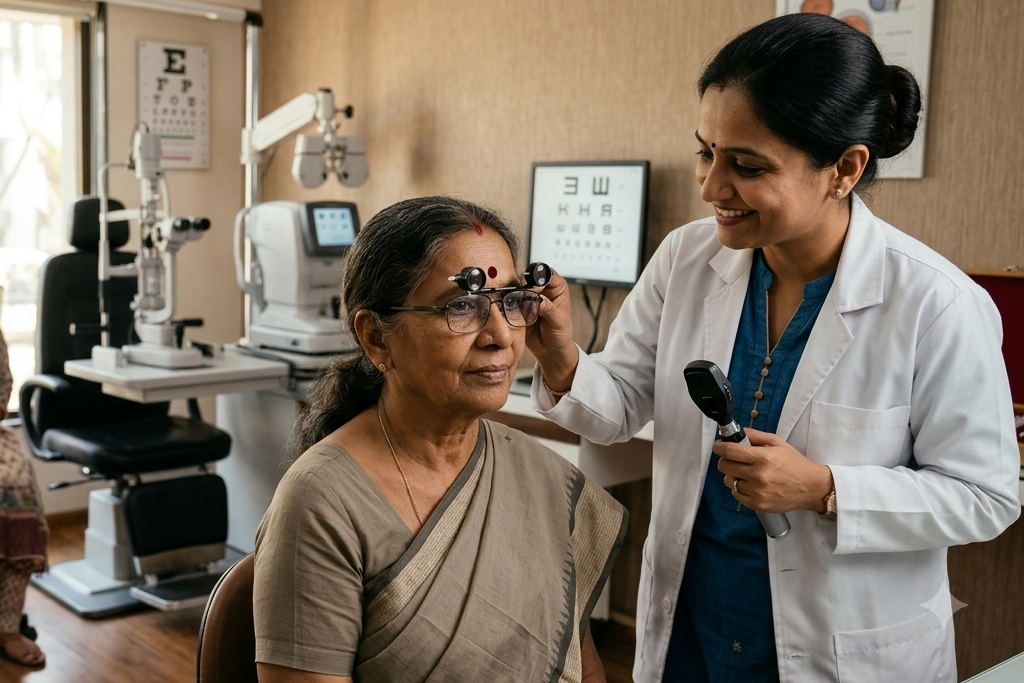
Low vision describes significant visual difficulty that glasses, contact lenses, medication or surgery cannot fully correct. Clinically, this generally means best-corrected vision of 6/18 or worse in the better eye, and/or a visual field of 10 degrees or less.
People with low vision often still have useful sight. What changes is how reliably they can use it for daily tasks — reading, recognising faces, watching television, using a phone or computer, seeing a classroom board, or coping with glare.
My role is to assess the vision a patient still has, and work out whether an optical or non-optical aid can help them use it more effectively.
Low vision doesn’t look the same in every patient. Some struggle with distance vision or small print. Others have reduced side vision, difficulty adjusting to changing light, or heightened sensitivity to glare. In some cases central vision is affected; in others it’s peripheral vision. The pattern depends on the underlying eye condition.
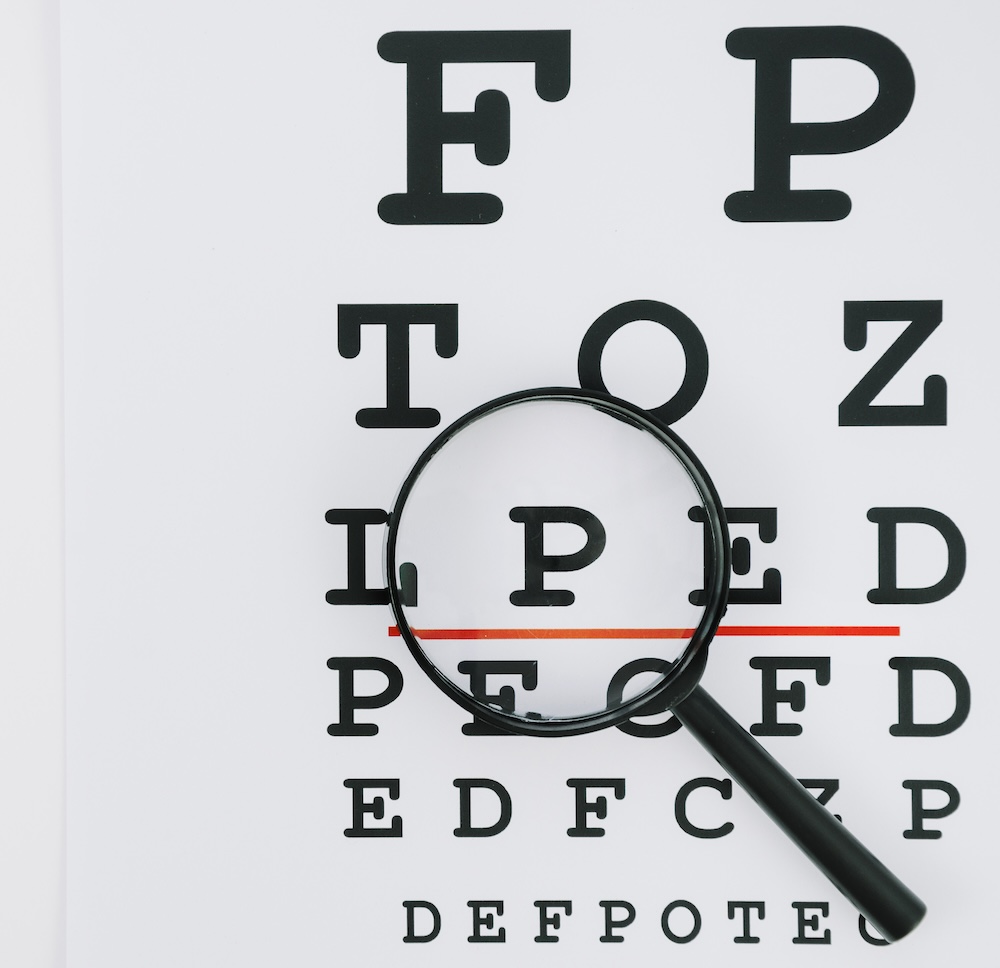
An eye chart reading tells only part of the story — how someone’s vision affects their day-to-day activities matters just as much. A low-vision assessment is built around understanding both.

difficulty identifying someone from a distance or making out facial details.

struggling with books, newspapers, labels or prescriptions.

missing detail on screen even when sitting at a comfortable distance.

trouble seeing a classroom board, textbooks or written work.

difficulty reading text or viewing images on digital screens.

discomfort or reduced vision in bright light or reflections.
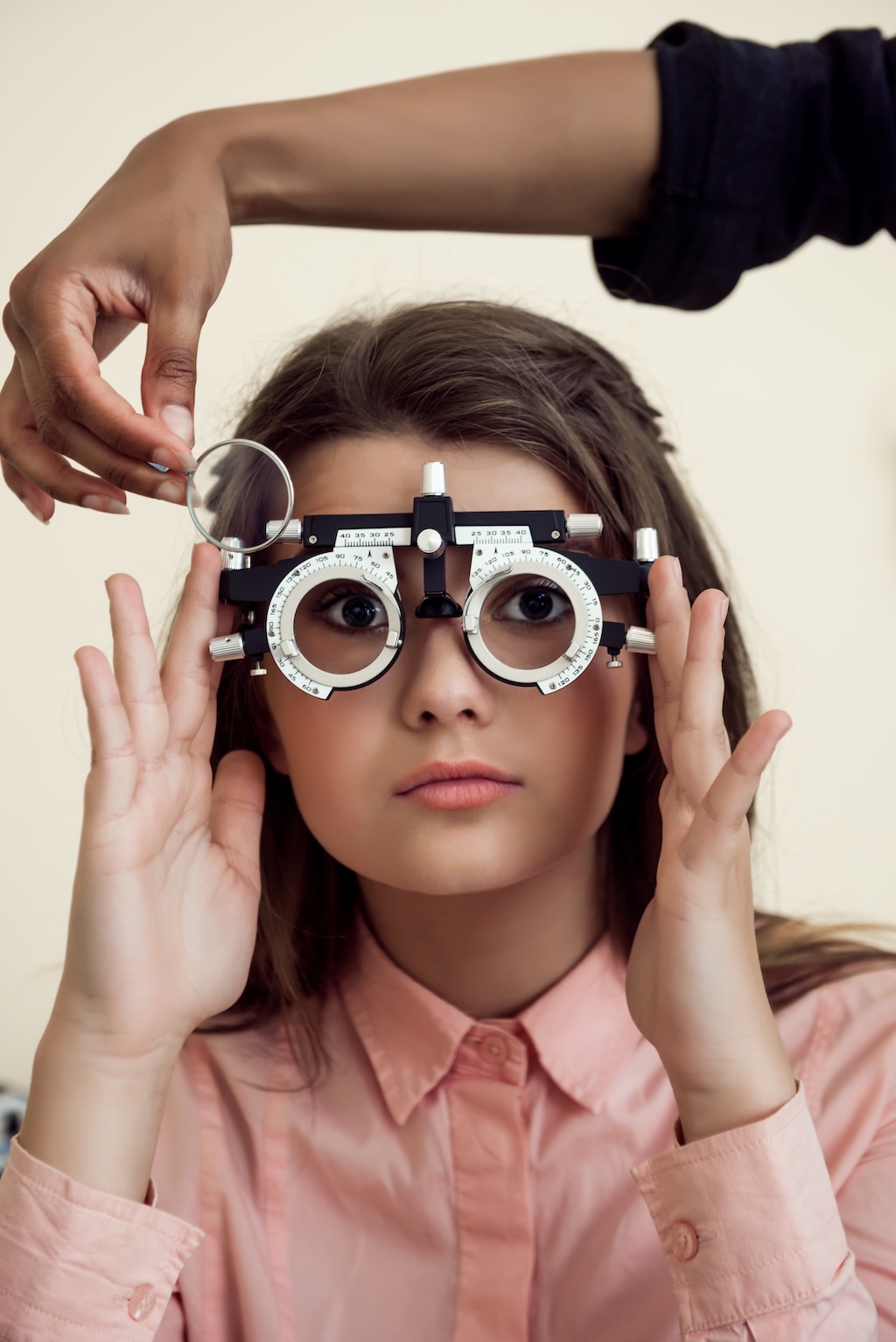
A low-vision aid won’t repair the underlying eye condition or restore normal sight. What it can do is help a patient get more out of the vision that remains — for reading, recognising faces, viewing distant objects, or using a screen. Which device suits someone depends on their vision, the specific task, and how they currently use their eyes.
The aim isn’t simply to find a stronger prescription; it’s to understand what the patient wants to be able to do, and whether an aid can get them there.
A low-vision aid won’t repair the underlying eye condition or restore normal sight. What it can do is help a patient get more out of the vision that remains — for reading, recognising faces, viewing distant objects, or using a screen. Which device suits someone depends on their vision, the specific task, and how they currently use their eyes.
No, vision aids do not cure underlying eye conditions. They maximize your existing visual acuity through magnification, contrast enhancement, and specialized optics.
Over-the-counter magnifiers usually offer weak magnification and uneven focus. A clinical low vision evaluation ensures you get task-specific powers, built-in lighting, and optical anti-glare coatings.
Common underlying conditions include Age-Related Macular Degeneration (AMD), Glaucoma, Diabetic Retinopathy, Cataracts, and Retinitis Pigmentosa.
A comprehensive trial and evaluation take approximately 45 to 60 minutes to test different optical powers and device formats.
Every patient is unique. Get expert guidance based on your individual needs and concerns.
Excellence Eye Centre offers specialised care in custom artificial eyes and ocular prosthetics in Mumbai.
+9199300 42815
excellenceeyecentre@gmail.com
Parel, Mumbai
Lorem ipsum dolor sit amet, consectetur adipiscing elit. Ut elit tellus, luctus nec ullamcorper mattis, pulvinar dapibus leo.
(+12)345-6789-1123
avida@mail.com
Somewhere, Earth
Please share a few details so Dr. Pawar's team can assist you better.