
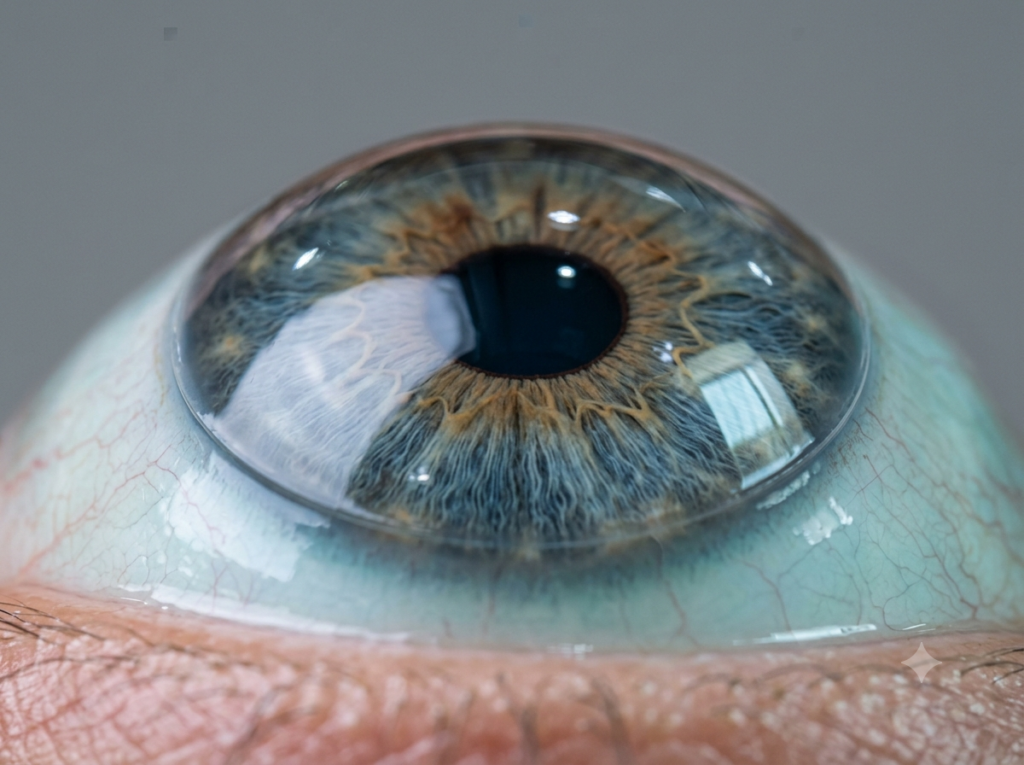
Not every eye can wear a standard contact lens comfortably. If you have keratoconus, an irregular cornea, severe dry eye, or vision problems after corneal surgery, conventional lenses may not provide clear vision or may become too uncomfortable to wear.
Specialty contact lenses are custom-fitted to match the unique shape and needs of your eye. The right choice depends on your corneal shape, the health of your ocular surface, your visual requirements, and—most importantly—how the lens feels when you wear it.
For many years, I’ve fitted scleral lenses, Rose K lenses, hybrid lenses, piggyback systems, and other specialised designs, carefully selecting the most suitable option for each patient’s eyes rather than relying on a one-size-fits-all approach.
Speciality contact lenses are recommended when regular lenses cannot provide clear vision, comfort, or a stable fit. They may be considered for:
Keratoconus, irregular corneas, and pellucid marginal degeneration (PMD).
Dry eye disease (keratitis sicca), Sjögren's syndrome, and chronic graft-versus-host disease (GVHD).
Stevens-Johnson syndrome (SJS), toxic epidermal necrolysis (TEN), and persistent epithelial defects (PED).
Post-penetrating keratoplasty (corneal transplant) and previous radial keratotomy (RK).
Selected specialty lens options for managing progressing myopia.
Additional corneal or ocular surface conditions requiring an individualized approach.
Every eye is different. The right speciality lens is selected only after evaluating your corneal shape, ocular surface health, visual needs, and comfort during the trial fitting.
Speciality contact lenses are recommended when regular contact lenses or glasses cannot provide clear, comfortable vision. They are custom-fitted after carefully assessing the shape of your cornea, the health of your ocular surface, and your visual needs.
They may be considered for:
Keratoconus and irregular corneas
Severe dry eye and ocular surface disorders
Vision problems after corneal surgery
Children with progressing myopia
Other complex corneal conditions
A detailed corneal topography scan helps determine which lens design is most suitable for your eyes, because the right lens is chosen to match your eye—not the other way around.
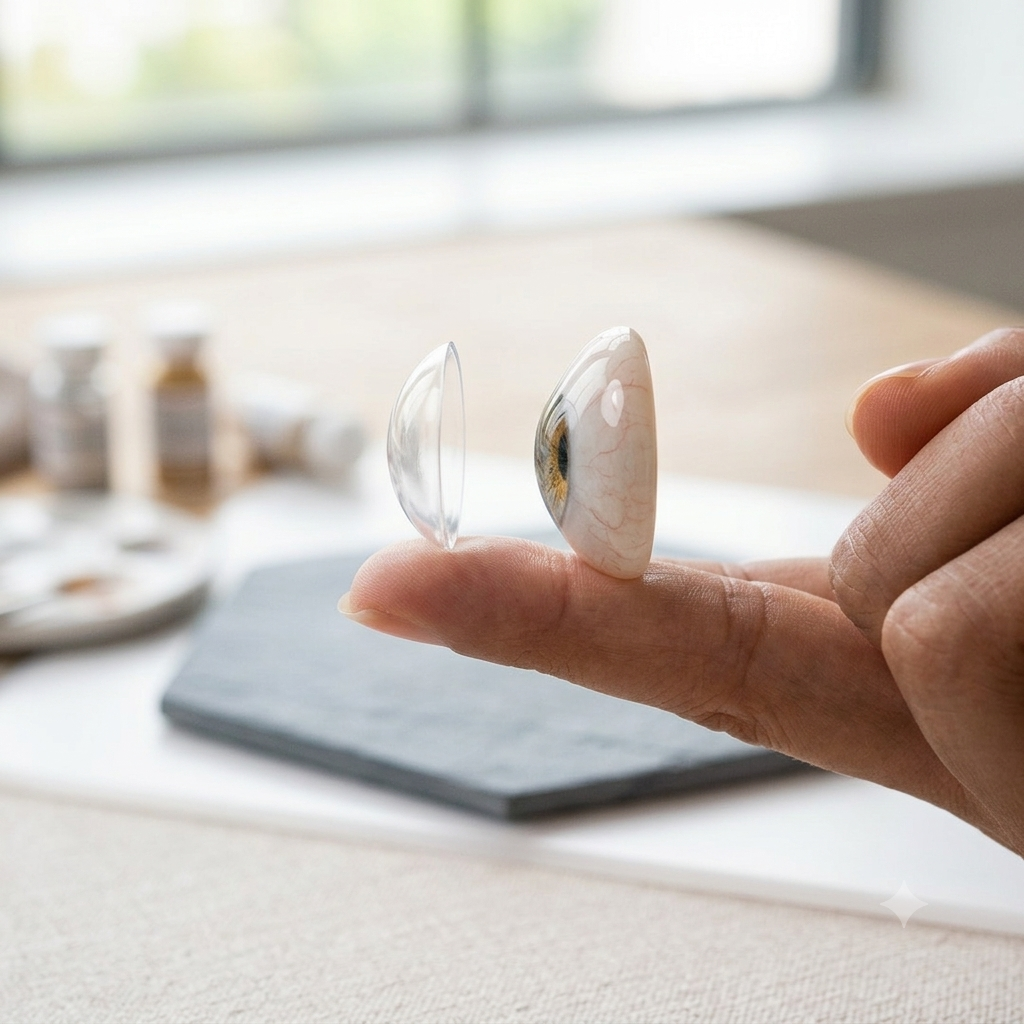
Every specialty contact lens is designed for a different purpose. The right option depends on your corneal shape, eye health, vision needs, and comfort during a detailed fitting.
Larger lenses that rest on the white part of the eye, creating a protective fluid layer over the cornea. They are commonly used for keratoconus, severe dry eye, and other complex corneal conditions.
Specially designed rigid gas-permeable lenses for keratoconus and irregular corneas. Each lens is selected according to the unique shape of your cornea for clearer, more stable vision.
These lenses combine a rigid centre for sharp vision with a soft outer skirt for added comfort. They can be a good option for people who struggle to wear fully rigid lenses.
A soft contact lens is worn underneath a rigid lens to improve comfort while maintaining the vision correction of a rigid lens. This approach is used in selected complex cases.
Specially designed lenses can form part of a myopia management plan for children and teenagers. The choice depends on age, eye health, and how quickly the prescription is changing.
Tinted lenses such as the X-Chrome lens may help some people distinguish certain colours more easily. They do not restore normal colour vision, and suitability is assessed individually.
Specialty contact lenses are custom-fitted lenses designed for eyes that cannot achieve clear or comfortable vision with regular contact lenses. They are commonly used for keratoconus, irregular corneas, severe dry eye, and certain post-surgical eye conditions.
They may be recommended for people with keratoconus, irregular corneas, severe dry eye, corneal scars, vision problems after corneal surgery, or children who need myopia management. A detailed eye examination helps determine whether they are suitable for your eyes.
Unlike regular contact lenses, scleral lenses rest on the white part of the eye and create a protective fluid layer over the cornea. This design can provide clearer vision and greater comfort for suitable patients with complex corneal conditions.
Many patients find them comfortable once they are properly fitted. The fit is customized to your eye, and follow-up visits help fine-tune the lens for comfort and vision.
The fitting process usually involves a detailed eye examination, corneal topography, trial lenses, and follow-up adjustments. The number of visits depends on the type of lens and your individual eye condition.
Yes, they may help improve vision after certain corneal procedures, including corneal transplant surgery and other cases where the corneal surface has become irregular. Suitability is always determined after a comprehensive assessment.
Every patient is unique. Get expert guidance based on your individual needs and concerns.

Excellence Eye Centre offers specialised care in custom artificial eyes and ocular prosthetics in Mumbai.
+9199300 42815
excellenceeyecentre@gmail.com
Parel, Mumbai

Lorem ipsum dolor sit amet, consectetur adipiscing elit. Ut elit tellus, luctus nec ullamcorper mattis, pulvinar dapibus leo.
(+12)345-6789-1123
avida@mail.com
Somewhere, Earth

Please share a few details so Dr. Pawar's team can assist you better.