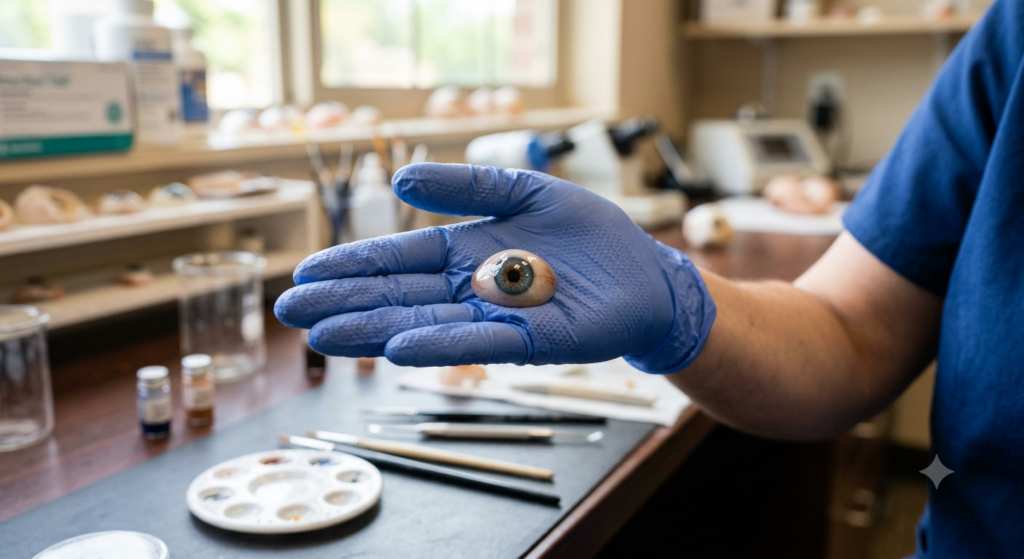
An artificial eye – an ocular prosthesis – is made for someone who has lost an eye, or whose eye is severely damaged, malformed or no longer functional.
I’ve worked in ocular prosthetics for over 18 years and made more than 6,000 custom eyes for patients from India and abroad. Every case is different: the shape of the socket, the condition of the surrounding tissue, and the appearance of the other eye all shape what the finished prosthesis needs to be. The goal is a prosthesis that sits comfortably and looks as close to natural as the individual case allows.
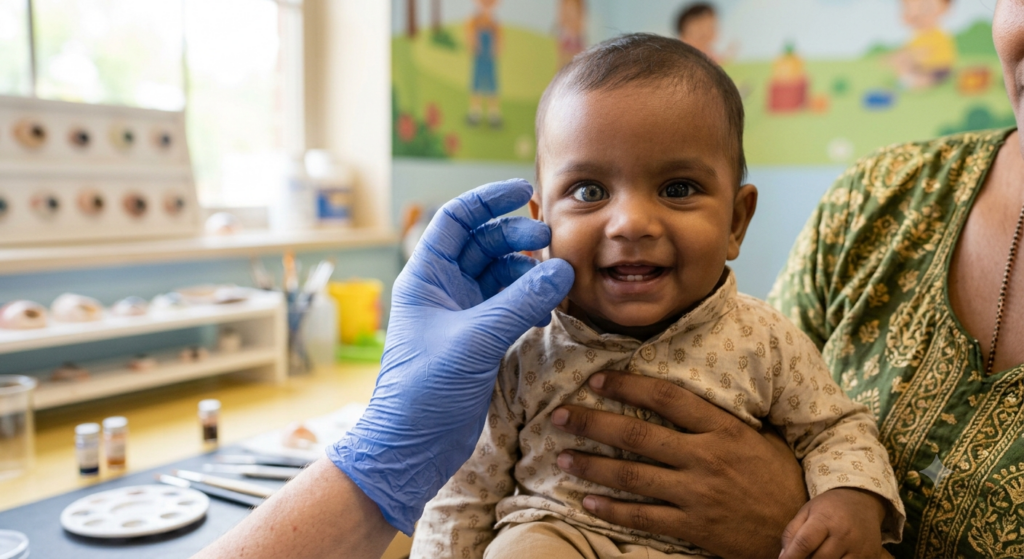
Some infants are born with congenital eye conditions where one or both eyes do not develop fully in the womb. The most common conditions requiring early ocular prostheses include:
Early intervention by a specialized pediatric ocularist is essential in these cases. Fitting a series of conformers and custom prosthetic eyes early in childhood helps stimulate normal facial and orbital bone growth, ensuring both aesthetic symmetry and proper physiological development as the child grows.
Many adults and older children require an artificial eye following medical trauma, progressive disease, or surgical intervention. A custom ocular prosthesis can restore natural facial aesthetics and comfort for conditions including:
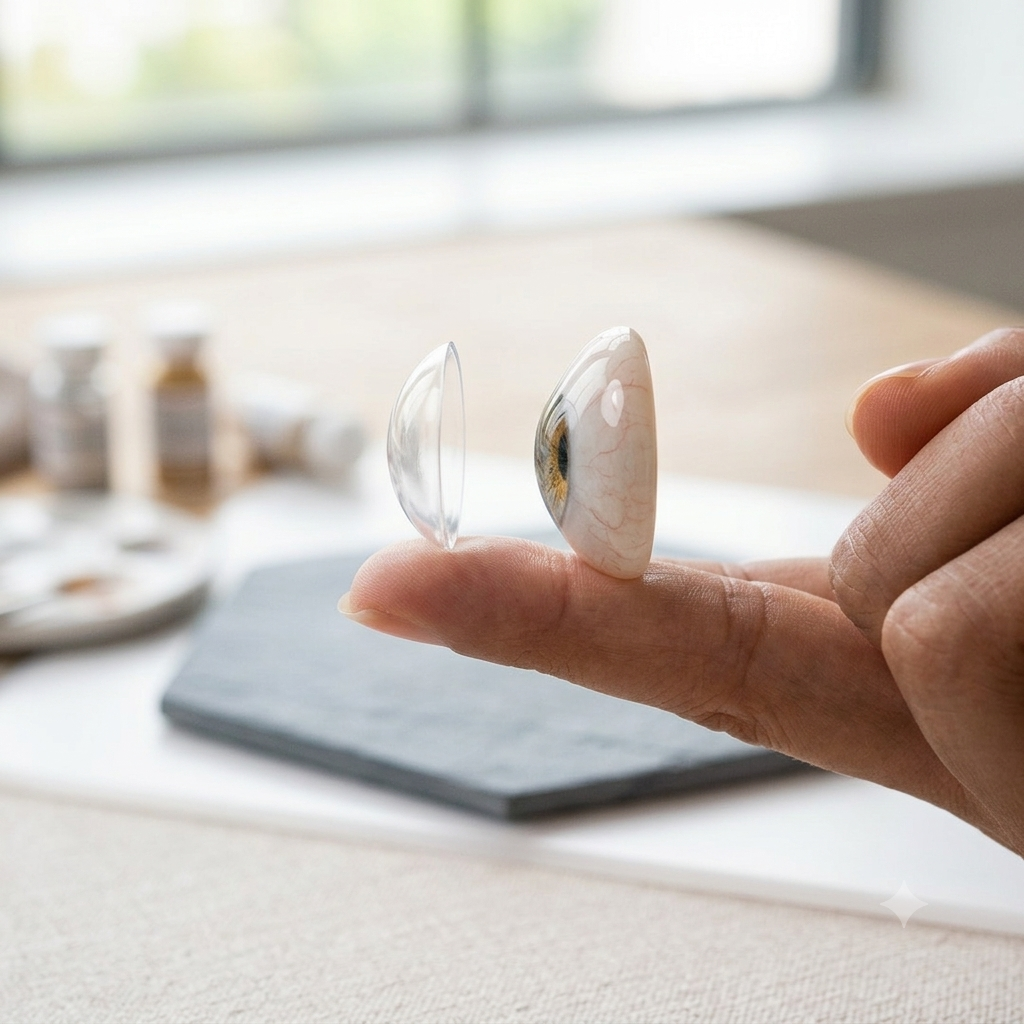
Every patient requires a tailored solution based on their surgical history, socket anatomy, and tissue structure. The primary types of custom prostheses include:
Usually once the socket has had enough time to heal — the exact timing depends on the individual case and is decided alongside your surgeon.
That's the goal — your other eye is the reference point for colour, iris pattern, size and proportion throughout the process.
No. Socket shape and tissue condition differ from patient to patient, so the design has to be worked out individually each time.
In some cases, yes - a scleral cover shell can be fitted over an existing eye that's malformed, blind or shrinking. Whether that applies to you needs an assessment.
It depends on your specific condition, your socket, and whether the natural eye is still present. That's best worked out in a consultation.
Every patient is unique. Get expert guidance based on your individual needs and concerns.

Excellence Eye Centre offers specialised care in custom artificial eyes and ocular prosthetics in Mumbai.
+9199300 42815
excellenceeyecentre@gmail.com
Parel, Mumbai
Lorem ipsum dolor sit amet, consectetur adipiscing elit. Ut elit tellus, luctus nec ullamcorper mattis, pulvinar dapibus leo.
(+12)345-6789-1123
avida@mail.com
Somewhere, Earth
Please share a few details so Dr. Pawar's team can assist you better.